2025 CSA Season Week Seventeen
We’re only a handful of weeks away from the end of the season. Can you believe it?! It’s been a great season so far, and we are so grateful that we’ve been able to share it with all of you! Thank you so much for your support of the farm.
Are you making changes to your schedules in the next few weeks? Let me know!
We are coming up to the end of the season, and we know there are still changes you may need to make. Please let me know as soon as possible so we can help you! The last delivery of the season will be Week 20, the week of October 21st. We are not able to make any deliveries beyond that week, so the sooner you let me know if you aren’t able to make a pickup day, the sooner I’ll be able to get you back on the schedule for a day that does work for you!
Please do remember we still need at least 7 days notice to make any of those changes.
The Florence Market and the Eugene Farm Stand will be closed this week due to weather!
There is going to be some interesting weather this week! The market runners for the Florence Farmers’ Market have decided it’s going to be a little too dangerous with the heavy winds to set up on the pier this week, so there will be no Florence Farmers’ Market today. That said, we will still be delivering your shares to their regular site as usual.
Because it’s supposed to be stormy with some pretty fierce winds, we’ve also decided not to set up for the Eugene Farm Stand this Wednesday. However, your shares will still be delivered! We’ll most likely get there between 12 and 1 and deliver the boxes, and they’ll be set up to the right of the main doors to the Emmaus Church near the lawn. The deadline for picking up will still be 6pm, so please make sure to get your shares by the normal time. Thank you so much to everyone, and stay safe!

We have pears this week for your boxes!
We’ve partnered with the wonderful people at Mt. Hood Organic Farms to provide you with pears for your final delivery! Mt. Hood Organic Farms is located at the base of Mt. Hood in the Upper Hood River Valley. They’ve been around since the turn of the century, and their gorgeous grounds are perfect for both growing fruit and hosting beautiful wedding venues. Their pear and apple orchards boast near one hundred different varieties, and we’re so thrilled we get to offer you a taste of their magnificent, organic, biodynamic produce. If you’d like to know more, visit their website to learn more about their awesome operation!
Come see us on October 19th for the Harvest Potluck!
Come see us on Sunday, October 19th, for a harvest potluck here at the farm! From 12pm to 3pm, we’ll have the farm open to visitors from our CSA program and anybody else who wants to come! We’ll start lunch at noon, so bring your favorite dish, a comfy chair, and whoever you want to spend the day with. We always end up with some delicious food, and we can’t wait to see what you come up with!
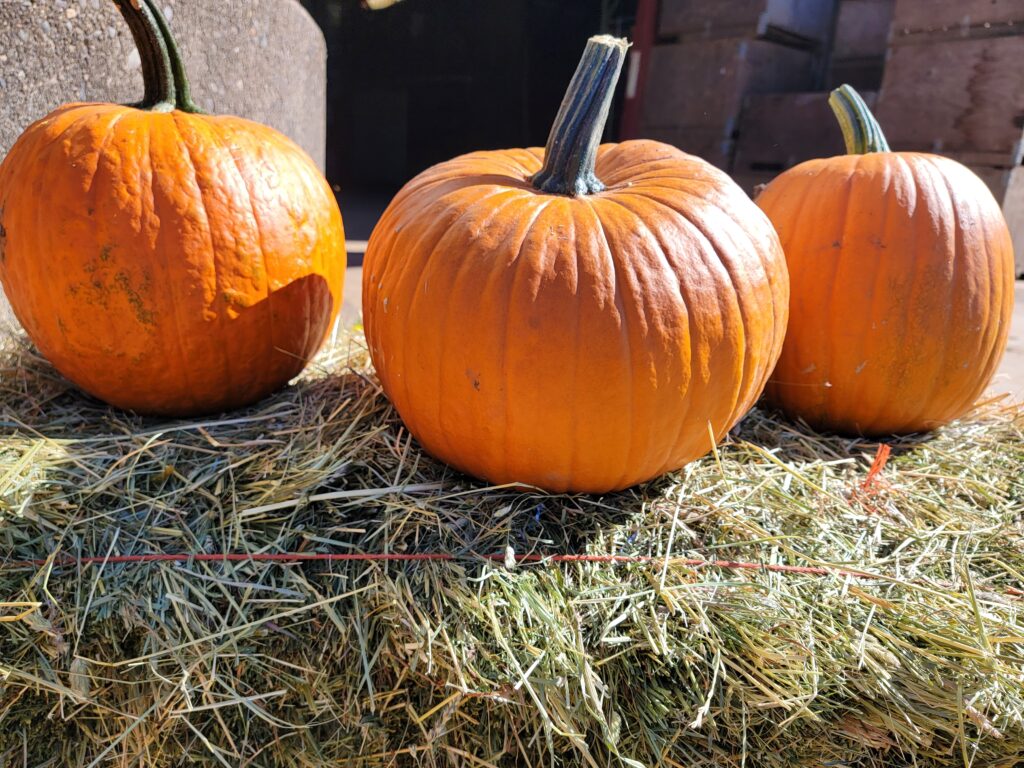
We’ll have great food, a cider press, pumpkins for our CSA members, and farm tours to see what we do out here! We won’t be able to do hay rides this year because the wagon needs some repairs, but we will do walking tours so you can still see everything going on! We would love to see all of you there!

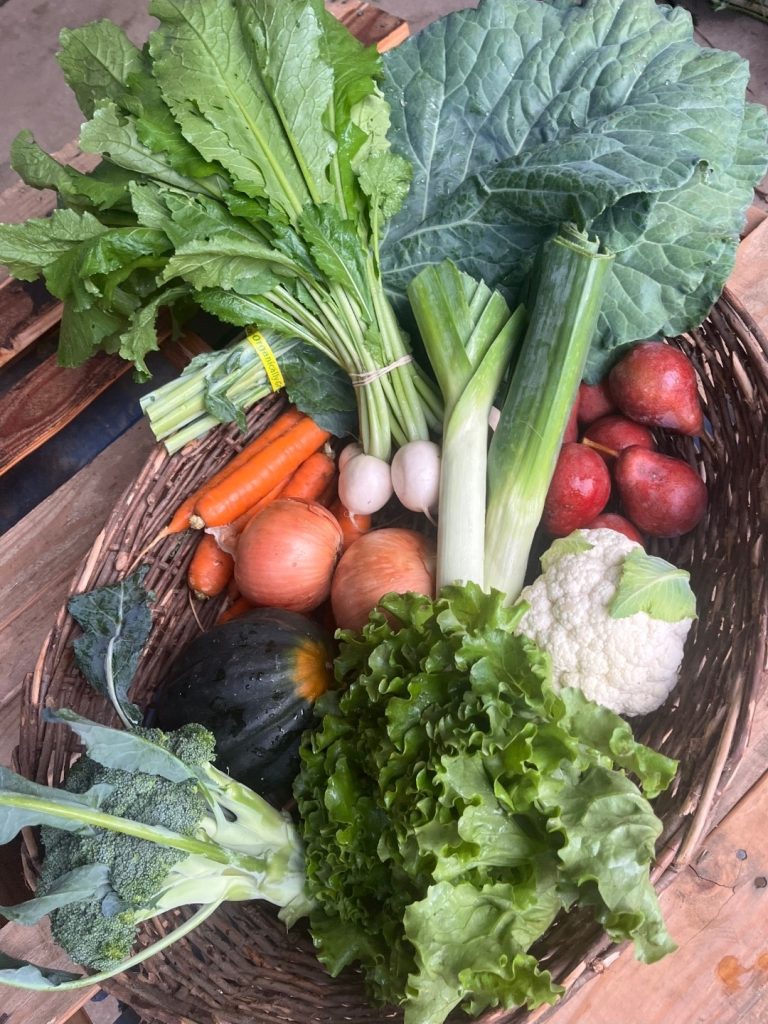
What’s in your box this week:
- Pears
- Baby turnips
- Lettuce
- Collards
- Broccoli
- Carrots
- Acorn squash
- Leeks
- Onion
- Cauliflower
We were able to get everything to everyone today, so it should be a great box!
Handy Tips:
- Pears: Pears are best enjoyed within a few days of becoming ripe. Fresh pears will ripen from the inside out, so if your pears are soft on the outside, you may have waited too long. Store unripe pears at room temperature until they ripen. You can store them next to bananas or avocados or in a paper bag to ripen them faster. Ripe pears can be stored in the refrigerator at 35 to 45 degrees. You can also freeze or dry your pears to enjoy them after the season ends.
- Turnips: Cut turnip greens from their roots and store separately. Keep dry, unwashed greens in a sealed plastic bag in your fridge. Thicker greens will keep up to two weeks. Tender ones should be eaten within a week. To store turnips, place them in a plastic bag, unwashed, in the crisper bin of your fridge. Due to high water content, turnips may deteriorate quickly, but most should keep for a week.
- Collards: Just prior to use, swish the collard leaves in a basin of lukewarm water. After any grit has settled, lift the leaves out carefully. This may need to be done more than once. You can store collard greens wrapped in a damp towel or plastic bag (preferably unwashed) in the hydrator drawer of your refrigerator. They are best used fresh, but they may last for up to a week if they’re stored properly. Keep them moist. Collard greens can be cooked or eaten raw as a wrap for stir-fries and salads.
- Broccoli: Wrap the broccoli loosely in a plastic bag and keep it in the veggie bin or your fridge. Don’t use an air-tight bag, as broccoli continues to respire after being harvested and needs room to breathe. It will keep for over a week, but is firmest and tastiest if used within a few days. To make sure your broccoli is fully cleaned and not carrying any tag-alongs from the farm, soak broccoli immediately before cooking, head down, in cold, salted water for 5 minutes. Broccoli can be steamed, stir-fried, or eaten raw. For salads or veggie platters, try blanching in boiling water for 1 to 2 minutes, then chill. You can add broccoli to soups and stews in the last 10 to 15 minutes of cooking time.
- Carrots: Cut or twist carrot tops off before storing in a plastic bag in the refrigerator. They will keep for several weeks. Clean the carrots well before eating by scrubbing with a vegetable brush under running water. Do not peel unless the carrots are damaged, as much of the nutrients are very close to the skin. Eat carrots raw in sticks, rounds, julienned, or grated. You can also add slices or chunks to soups, stews, or casseroles. Carrots are also delicious lightly steamed or sautéed, and garnished with butter or olive oil and fresh herbs. Try them grated with oil, lemon juice, parsley, garlic, salt, and pepper.
- Winter Squash: Store winter squash in a cool, dry, dark place with good ventilation. They should keep for up to a month or more, depending on the variety. You can also incorporate winter quash into a beautiful arrangement for your fall table. They won’t keep quite as long at room temperature, but if they are sitting on your table, you might be inspired to eat them quickly. Once squash has been cut, you can wrap the pieces in plastic and store them in the refrigerator for five to seven days. To bake winter squash, cut it in half, scoop out the seeds and pulp, then place the halves on a baking dish filled with a half-inch of water, cut-side down. You can also bake without the water, just lightly grease a baking sheet or use parchment paper. Bake squash at 350 degrees until halves are completely soft and just starting to collapse. This could take 45 minutes to an hour, sometimes more, depending on the size of the squash. Remove squash from the oven, fill with butter, seasoning, or filling, and serve them in the shell. Winter squash can also be substituted in baked goods. Try using it instead of pumpkin or sweet potatoes in dessert recipes. While the oven is hot, try roasting the seeds after mixing them with a little oil and seasoning of your choice.
- Leeks: Place dry, unwashed leeks in a plastic bag and store them in a drawer of your refrigerator. Leeks will store well for up to two weeks.To clean leeks for cooking, trim the roots, remove the green tops (which can be used in soup stock) and peel off the outer leaf layer, removing any hidden dirt. Cut leeks in half lengthwise and chop. Most recipes only use the white portion. Leeks can be substituted for any recipe calling for onions. They develop the best flavor when cooked or sautéed slowly.
- Cauliflower: Cauliflower is best eaten soon after it’s harvested, but it will keep for one to two weeks in the refrigerator if you wrap it loosely in plastic. Remove the outer leaves, rinse, and trim off any blemishes or brown spots. To cook florets, steam for 15 to 20 minutes. Overcooking will result in a strong odor and flavor. Stir-fry the florets with other veggies, add to Indian or Asian curries, top steamed heads with lemon and butter or parmesan cheese, or serve raw with dip.

What We’re Making this Week:
- This Easy Pear Crumble could be a fantastic way to use some of those pears this week!
- Have you made anything with baby turnips before? These Roasted Baby Turnips with Garlic and Za’atar could be a great place to start!
- These Rosemary Potatoes with Collard Greens and Vegan Sausage might be the perfect dish for stormy weather!
- Looking for a fall dish to tickle your tastebud? Give this Broccoli Bacon Salad a try!
- This Shepherd’s Pot Pie is the perfect way to use your carrots this week!
- There are many ways to eat acorn squash, but this Stuffed Acorn Squash looks delicious!
- This Asparagus, Leek, and Feta Quiche is a great addition to your table this fall!
- These French Onion Loaded Baked Potatoes are a fun twist on an old comfort, and perfect for an autumn meal!
- Looking for a tasty side for dinner this week? This Cauliflower Pasta might just do the trick!
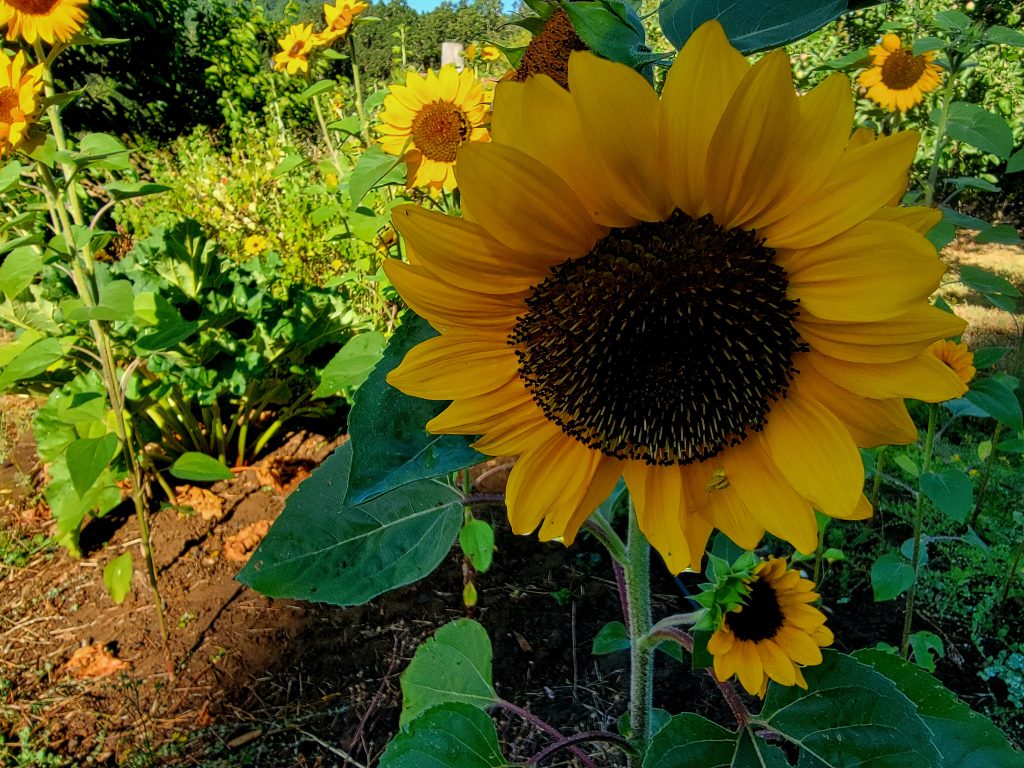
As October comes into full view, we hope you’re all having a wonderful autumn, and we hope to see you at the harvest potluck on the 19th!
Many blessings,
Chelsea and your Winter Green farmers