Raising Our Beef
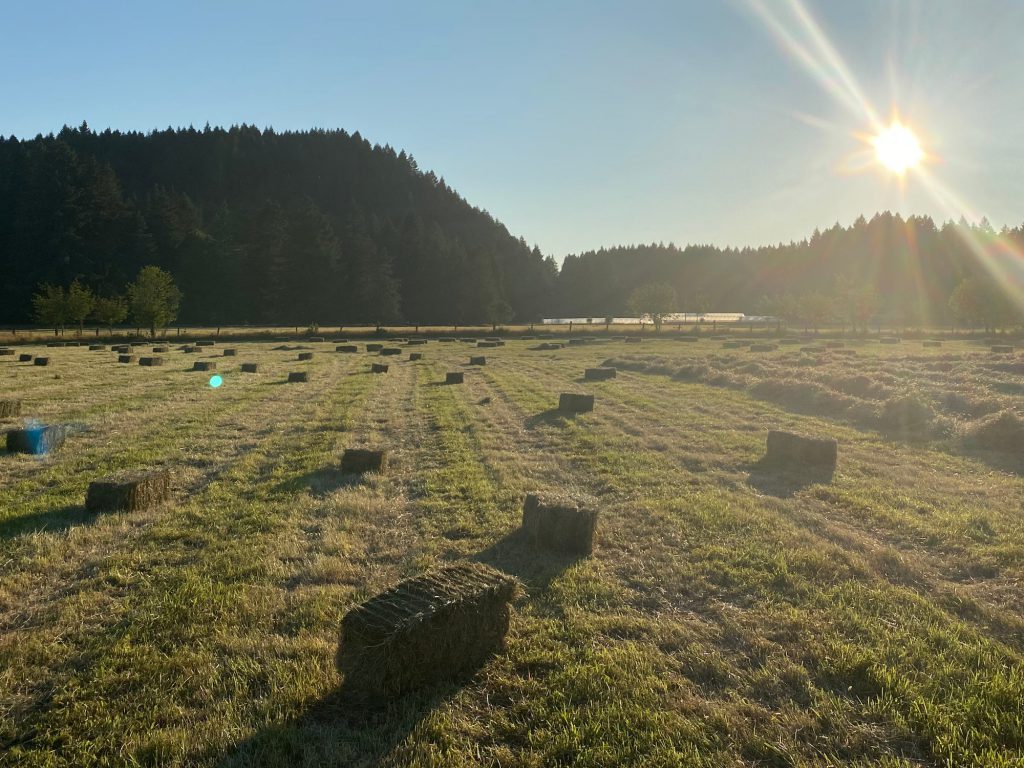
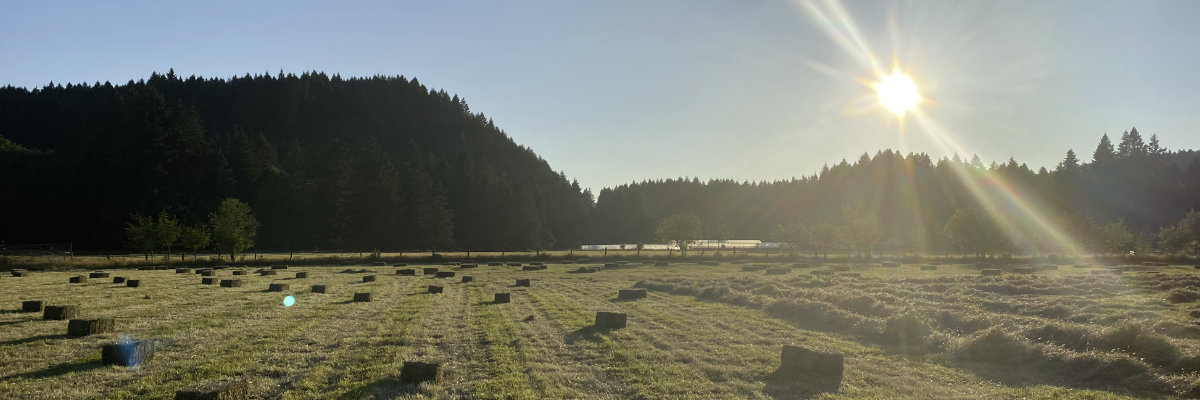
Winter Green Beef is a Certified Organic, Biodynamic and 100% Grass Fed ranch using rotational grazing for regenerative pastures. We steward 250 acres of pasture in Western Lane County. Our small family farm exists to protect and enhance the land we care for and the surrounding ecosystems. Excellent grazing practices add carbon, build soil and improve water quality. Also, as part of an intact ecosystem, our regenerative pastures provide habitat and feed to life forms big and small. From elk and cougars, to coyotes and bobcats to microscopic decomposers, there is food for everyone.
In place of herbicides, we graze to promote the plant communities we value. Additionally, we use mechanical weed management when needed. Instead of synthetic fertilizers we apply compost made on site to add fertility.
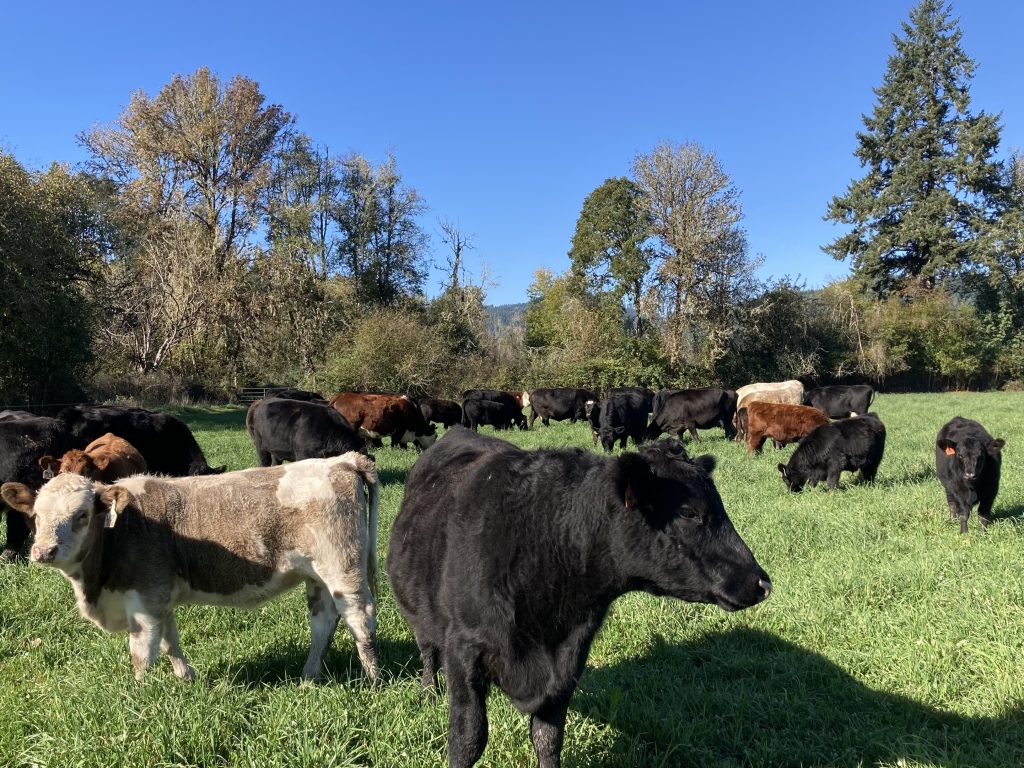
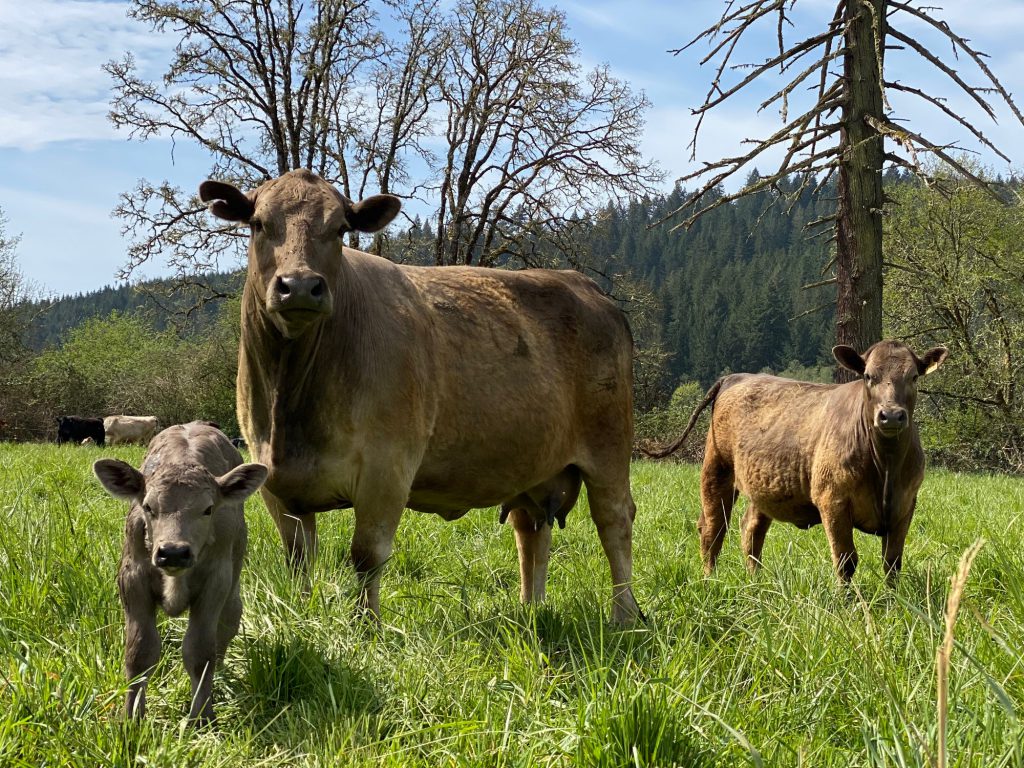
Our 25-30 cow herd calves every spring on fresh pasture and grazes from March to November. Then in winter our herd moves to our open-air barn to eat the certified organic feed we make on farm. Every spring we buy 20-30 one year old “yearling” cattle to help eat the plentiful forage during the grazing season. These yearlings and our calves born the previous spring are harvested on farm around 18 months old.
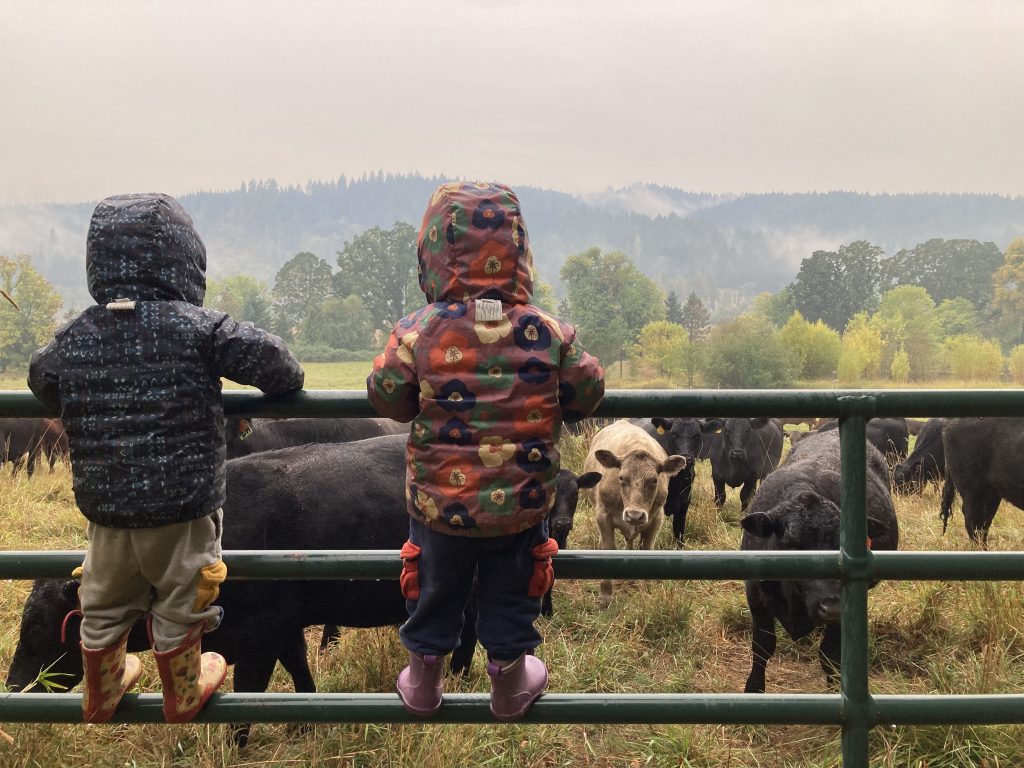
On farm harvest is part of our commitment to gentle and humane handling of our cattle. It minimizes the stress of transport and of the large slaughter house system. Expert, quiet and respectful killing is done by our mobile butcher. Our herd sees us every day when we check the pastures and move them to fresh feed. This builds recognition and trust and makes moving and handling much easier. Our kids love to help call the cows to the next pasture – “Come on cows!”.
We are grateful to care for our land and animals and to provide our community with lovingly raised food.
Beyond Grass Fed
At Winter Green Beef, we pasture our cows on a diverse mix of organically-grown grasses and legumes. We never feed grain and instead raise our cattle as nature has taught us; in a way that is healthy for the animals, the environment, and you.
Healthy and Delicious
Grass fed beef is better for the environment and you.
- 10x more healthy Omega 3s
- 5x more CLA – and anti carcinogen
- Higher in phytochemicals
- 9x more niacin – a B3 vitamin
Rotational Grazing
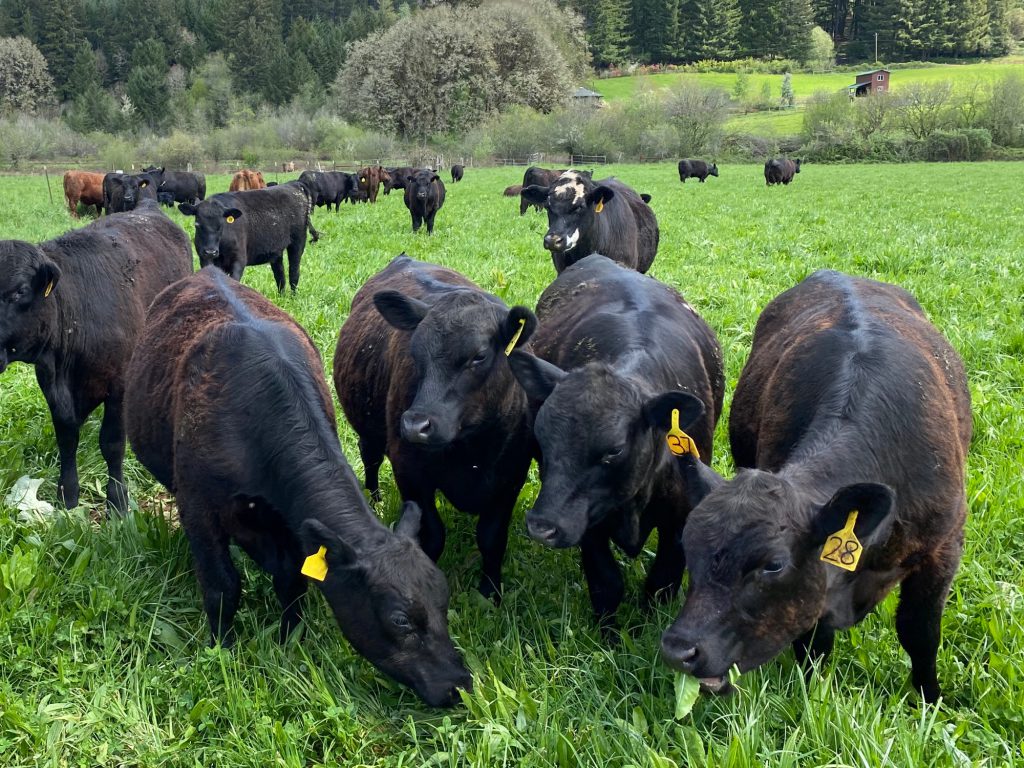
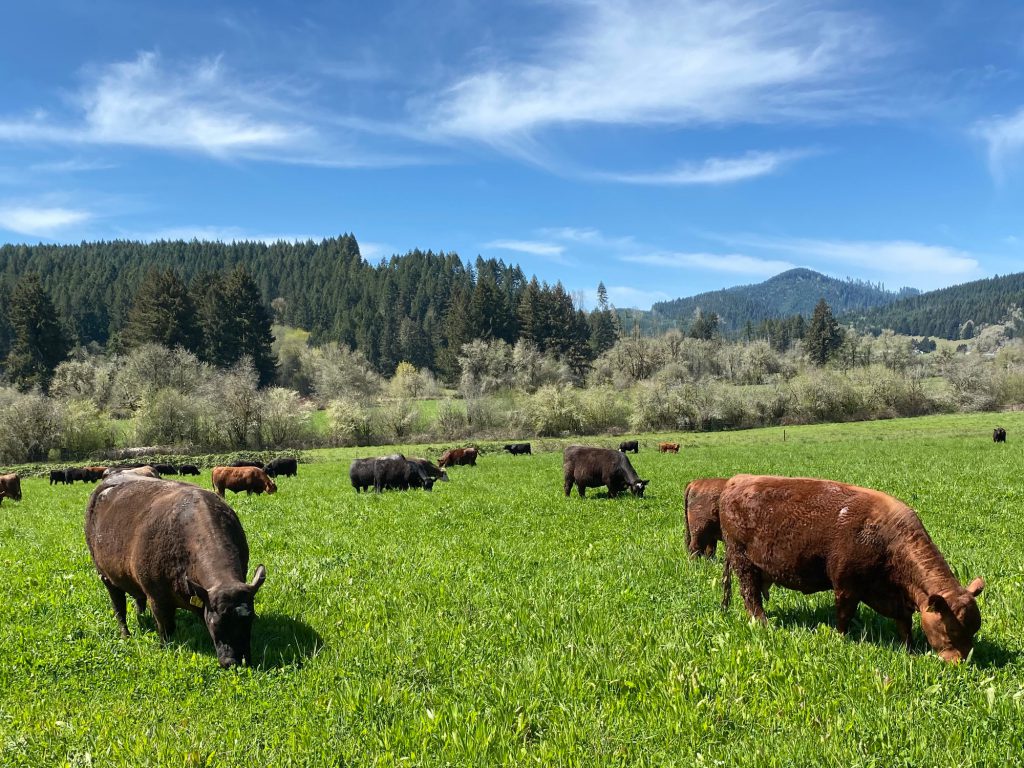
We keep our cattle on small pastures and move them every one to three days to fresh, clean forage. Because this method mimics the natural relationship between predators and grazing animals, we ensure the pastures are never overgrazed. Disturbance and rest provides the ideal environment for the pasture ecosystem to thrive – from the microbes to the plants to the cows.
Protected Riparian Areas
Without predators to keep animals moving, riparian areas are favorite gathering spots. This overuse causes severe damage and water pollution. So, we have chosen to protect our riparian ecosystems by fencing the animals out of these sensitive areas.
Protected Pastures
Due to wet Pacific Northwest winters, the weight of the cows can damage the fragile pasture ecosystem causing irreparable harm to the soil and plants in these pastures. So, we comfortably house our cows and calves in a roomy, straw-bedded barn during the rainy months.
Providing Fertility
Because we don’t want to rely on animal manure from large operations we have chosen to incorporate fertility practices into our farm. The compost for our veggie farm is made from cow manure and straw bedding collected in the barns during the winter. We then spread our compost throughout the farm to feed and balance the soil with organic matter and microorganisms.